Por: Magdalena Mihaylova


It is not expected of critics as it is of poets that they should help us to make sense of our lives; they are bound only to attempt the lesser feat of making sense of the ways we try to make sense of our lives. – Frank Kermode, “The Sense of an Ending”
I.
En la ciudad amarilla, cojo la línea 6 para encontrarme con E en un bar debajo del puente. El camarero no para de traernos papas fritas, y acabo con la lengua seca de tanta sal y, quizás, un poco de nervios. E me mira de una manera que me recuerda a lo que nos contaron hace muchos años en una excursión escolar al zoológico.
—Niños, es muy importante que nunca miréis fijamente a los ojos de los animales, sobre todo a los que os son desconocidos.
El helado que compré con los cinco dólares que nos dieron los profes al inicio del día empieza su largo viaje hacia abajo del cono y la mano que lo sujeta, pero no puedo lamer su largo recorrido. Ya tengo una duda.
—Disculpe, señor, pero no entiendo. ¿Quiere decir que perciben el miedo?
—Sí, señorita —respondió el chico, que debió tener en ese momento unos veinte años (cuando era pequeña, todos los adultos parecían tener una edad estandarizada, como si compartieran la vejez). —Si te cruzas con alguno, acuérdate de los tres pasos: no corras, baja la mirada, y retrocede despacio.
Medito sobre ese consejo mientras E se pide otra cerveza en la barra. Cuando me pregunta si quiero una también, murmuro un No, gracias, e inclino la cabeza hacia el suelo, como si me estuviera revisando las zapatillas, un calzado demasiado ligero para este frío de diciembre.
Don Julio nos sirve más papas. Intento alejar mi silla de la de E, que de pronto ha migrado desde su lugar en frente a mi lado. Retrocede despacio, pienso.
II.
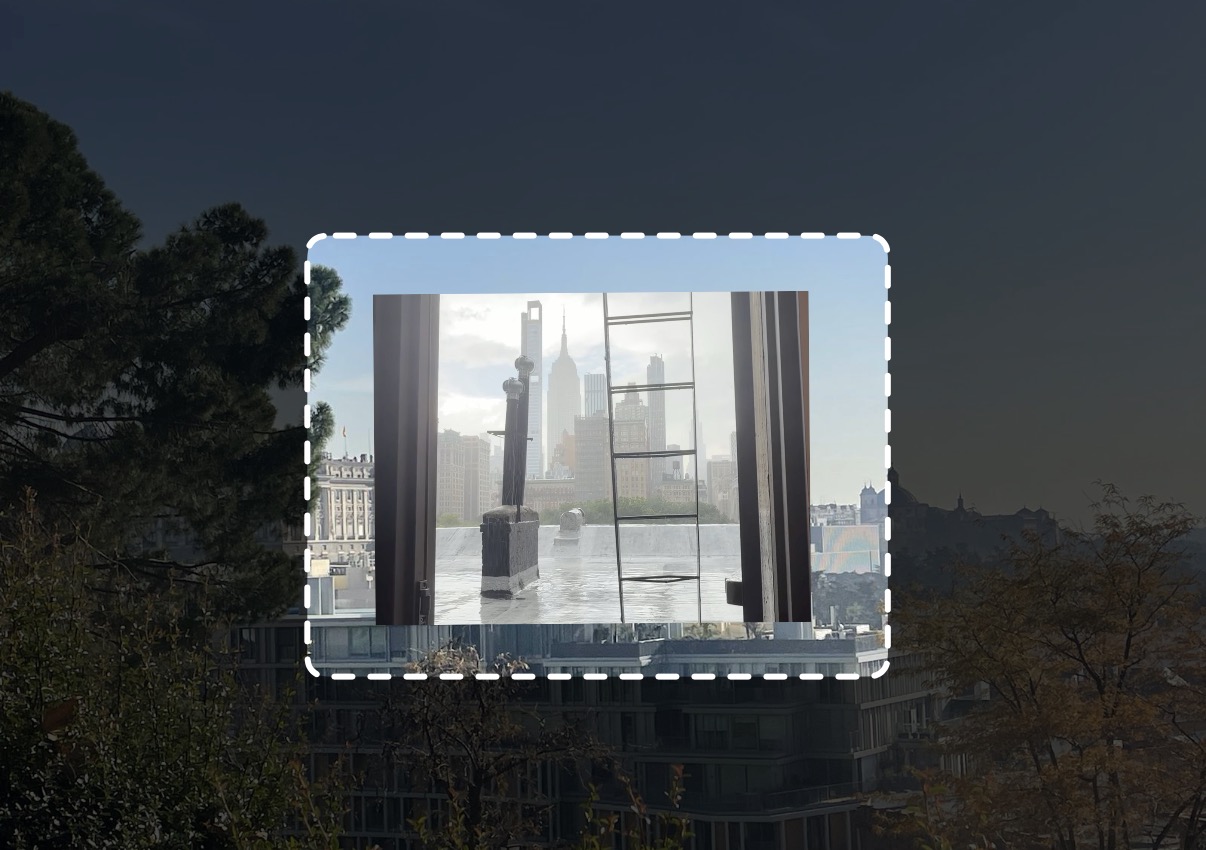
In my grey city –sometimes maroon like coagulated blood, sometimes dark green like used gauze– I forgo the 6 train to amble down Broadway on my way to Union Square. It’s a short walk, and not in any way enjoyable –the stretch between the office and the subway that takes me home is an exercise in dodging delivery riders on electric bikes, European tourists with aviators that were discontinued in 2013, and, for some reason, the weekly group of preteen ballerinas entering the hidden doorway next to the 19th Street AMC. A man is taking a piss next to the Chipotle and the Mitzvah Tank blares its usual song as I try to record a voice memo on my phone. It’s too loud, too crowded, too frantic of a moment to pull out my journal and jot down the stanza that has been hiding behind the skirts of my mind all day, shy in the office and now bold at the first glance of this overcast ceiling, skyscrapers cutting into it like a mail slitter. The only option is to vocalize it, or lose it forever.
When I get home, fumbling around in my bag to find my phone, I realize my headphones were connected to Bluetooth this entire time, and all that’s left of the recording is a dense, grating hum.
III.
Ahora, en mi nueva ciudad –la gris– me vienen recuerdos de la otra –la amarilla– como cuando empiezas una relación tras una ruptura. Aunque hayas sanado, de pronto todos los actos rutinarios se convierten en una interpretación superpuesta a otra, como cuando sacas una foto con baja exposición. Los fantasmas del amor pasado persiguen al nuevo como una transparencia casi semejante, pero nunca igual.
Cojo el metro, pero las voces que anuncian cada parada son diferentes.
Doy un paseo nocturno, pero la luna se halla en otro lugar del cielo. Por el día, el sol no pica con las mismas ganas.
En la discoteca, los chicos ligan preguntando ¿A qué te dedicas? en vez de ¿De dónde eres?
Al principio, me decía que esos susurros de antaño eran tonterías, y que en un mundo globalizado, todas las ciudades son iguales para los jóvenes de la nueva pequeña burguesía. Pero al pasar de los meses, mientras E se aleja –como si el amor midiese el tiempo– se acerca algo ambiguo, como dar vueltas a una masa blanda, sin forma todavía y maleable entre tus manos.
De vuelta a casa en la oscuridad, evito a las ratas, pero encuentro algo, también.
IV.
When I was in my old city and the weather was finally warm, I met E on narrow street corners and stone park benches, discussing literature and eating pizza. For the first time with a lover, touch didn’t feel primordial: talk did. Although I welcomed his warmth in the mornings and violence in the nights, what I most ached for was our clumsy vocal dances –or, I suppose, scuffles– which were seemingly about “theory” and “politics,” but actually concealed a simpler, uglier, more human subtext. My jealousy, his infidelity. My attachment, his distancing. My coarseness, his gentleness; his coarseness, my gentleness.
One night, lying on the bed with my head by his feet and vice versa, like my brother and I used to do as children, we debated a discretion of his from the past weekend.
I’m just wired this way, it’s who I am.
I think that’s an excuse. You must be hiding from something, or resisting. (Resisting me, I wanted to add, but didn’t.)
I don’t know. He turned his gaze up to the ceiling. I don’t think so, but talking to you forces me to examine these things.
Don’t run.
V.
Durante el descanso de mi día laboral, subo veinte manzanas al norte en búsqueda de un libro. Es muy difícil perderse en esta ciudad, con sus avenidas cuadradas y numeradas sucesivamente. Me genera algún tipo de paz, el orden predecible de las calles, saber que el destino está en diez, cinco, dos manzanas. El final tiene sentido, un plan que seguir y cumplir.
Mientras voy andando, sujeto mi bolso con una mano y mi vestido con el otro –se me sube con los pasos apurados que tengo que dar para llegar a la biblioteca, buscar el libro, sacarlo con la ayuda del funcionario apático, y volver a bajar toda Madison Avenue hacia mi oficina. Nos dan una hora para comer, bastante generoso en esta ciudad de fechas límites y clientes estresados, pero aún así, el tiempo es justo. Siempre lo es.
El vestíbulo de la biblioteca está helado, como si las ideas se tuvieran que conservar en una nevera, por miedo a que se echasen a perder.
—Hola. Estoy buscando The Sense of an Ending. El sentido de un final.
—No lo hay en esta biblioteca. El funcionario lleva mascarilla, así que no logro distinguir si me está sonriendo con penita, o si realmente es así de seco y directo, como la llegada de una ola de calima.
—¿A cúal tengo que acudir?
—No lo hay en ninguna parte de esta ciudad.
VII.
In the north- and alley-facing room of the four bedroom apartment that serves as my home in this city, I lay in the midday darkness (read: north- and alley-facing) parsing through the new Valeria Luiselli novel, “Beginning, Middle, End.” I find myself transfixed by one paragraph, in which she ponders the Latin root of the word “fiction,” which originally meant to shape or invent.
When we create, do we invent, or do we shape what was already there?
I wonder if there is meaning in the patchwork of concepts I have tried to weave together, or if the excavation only resulted in dust and ash, the lingering of a feeling instead of something solid you can hold. I wonder if love is the only lens that lets us truly understand the world and ourselves, as ancient and methodologically questionable as it might be.
I slide off the bed and open up my laptop, letting its light pool into the room like throwing open the morning blinds after a long, dense sleep. On page three, a James Baldwin quote from his essay, “The Creative Process,” catches my eye:
Societies never know it, but the war of an artist with his society is a lover’s war, and he does, at his best, what lovers do, which is to reveal the beloved to himself and, with that revelation, to make freedom real.
To my left, the only window in the room is filled with the brick wall of the building next door. Far below echoes the sound of someone rummaging through the trash bins. The city’s divisions like the lines of a palm, leading its inhabitants into different destinies. A city an ocean away, with its own fissures. Language, time, and a lack of both that turn a brief collision of minds and bodies into a search for the sense of a beginning, a middle, and maybe, even, an end.
Deja un comentario